

Message from the writer: "Stories of the Prophets in Islam are great stories with full of inspiration; both for character building and spiritual closeness to Allah. With 25 stories to tell, each one brings unique values to share with your children. There are ways to help them get to know, learn, and form connection with the Prophets' lives in a way that feels gentle and inviting, which will be shared on this blog."
Contents
Start with One Prophet's Story
Children learn best when information is simple, clear and repeated often. Rather than trying to teach many stories at once, begin with one Prophet, one moment from his story and one lesson your child can understand.
For example, Prophet Nuh عليه السلام can teach children about patience. Prophet Ibrahim عليه السلام can teach them about trust in Allah. Prophet Musa عليه السلام can teach them about courage, and Prophet Yusuf عليه السلام can teach them about forgiveness.
Keep the Story Short and Memorable
A good way to begin is by telling the story in a few simple sentences. For example, you can say:
“Today we are learning about Prophet Yunus عليه السلام. He made du’a to Allah when he was in so much difficulty (in the belly of nun/whale!), and Allah helped him.”
Then you can ask one gentle question, such as:
“What can we learn from this story?”
This way, listening to the stories of the Prophets and taking inspiration from it make the process feel personal, not a story simply to memorise.
Connect the Stories to Everyday Life
The stories of the Prophets are not only for memorising. They help children understand how to behave, how to make good choices and how to turn back to Allah.
After learning a story, you could ask:
“How can we show patience today?”
“When can we say thank you to Allah?”
“What should we do if we make a mistake?”
These small conversations help children see Islamic learning as something connected to real life, rather than just sitting as a theory.
Using the Prophets of Islam Wall Art as a Tool
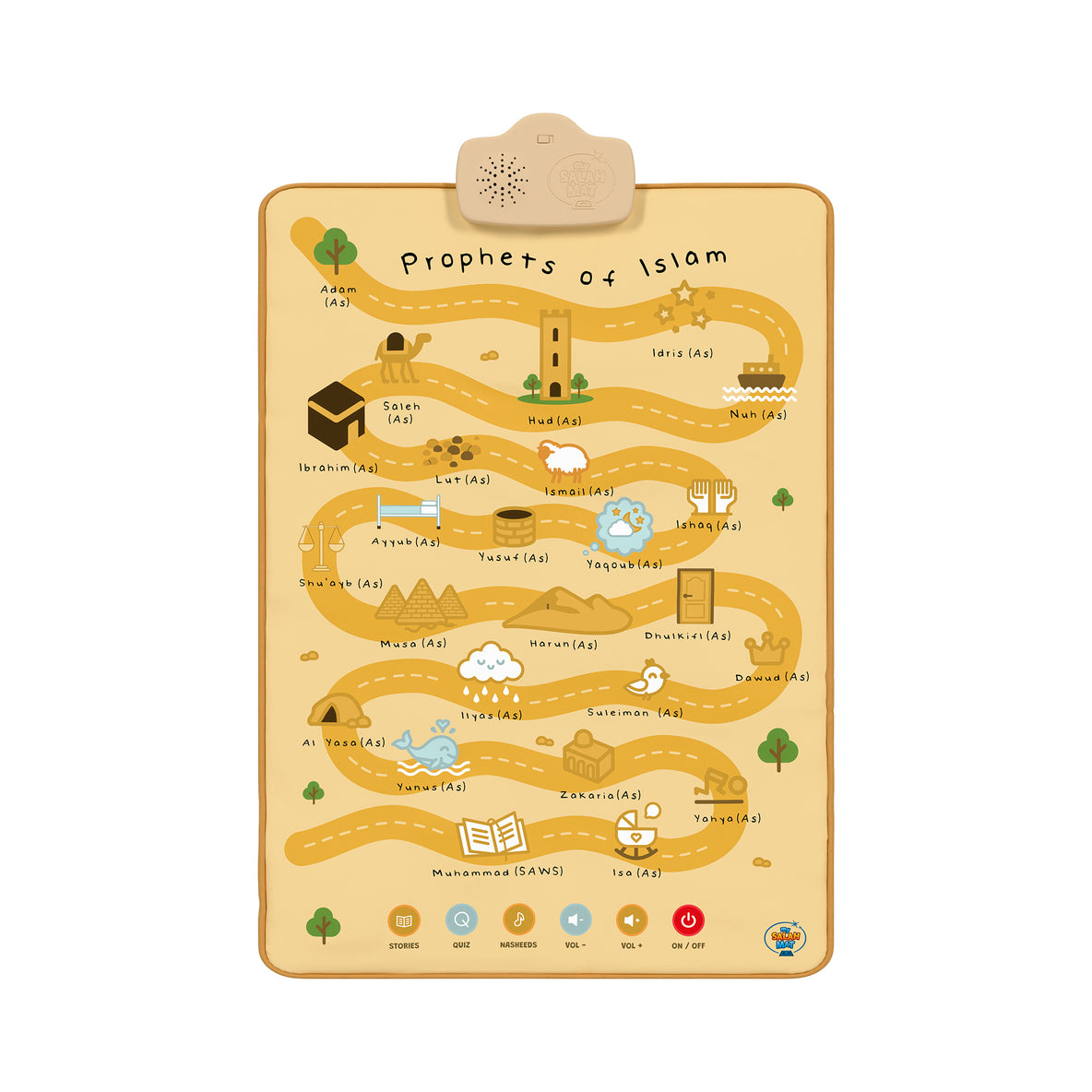
The Prophets of Islam Interactive Wall Art is designed to make learning the stories of the Prophets simple, engaging and screen-free. It uses touch, audio storytelling, visual learning and repetition to help children explore the 25 Prophets in a way that feels natural at home.

Step 1: Set Up a Calm Learning Space
Place the wall art somewhere your child can see and reach easily, such as a bedroom, playroom or family learning area. Try to choose a calm space where they can listen without too many distractions.
The wall art is battery-powered, so there are no wires needed, and the remote control makes it easy for parents to guide the session from anywhere in the room.
Step 2: Let Your Child Tap and Listen
Start by letting your child tap one Prophet’s icon and listen to the story. Keep the first session short. Even a few minutes of focused listening is a good beginning.
You do not need to complete all the Prophets in one day. Choose one story, listen together, then talk about what your child remembers.

Step 3: Repeat the Same Story
Repetition is important for children. You may choose one Prophet for the week and listen to the same story a few times. This helps your child become familiar with the name, story and lesson.
You can also use the vocal-only nasheeds as a gentle way to keep Islamic learning present in the home.
Step 4: Use Quiz Mode
Once your child has listened to a few stories, try the quiz mode. Keep it light and encouraging. The aim is not to put pressure on your child, but to help them remember what they have learned.
If they get an answer wrong, simply listen again together. Learning should feel warm, not stressful.
Step 5: Build a Wider Islamic Routine
The Prophets Wall Art can become part of a simple Islamic learning routine at home. You may use it before bedtime, after school, during Ramadan, or as a weekend family activity.
If your child is also learning Salah, the Kids Interactive Prayer Mat can help them connect Islamic stories with daily worship in a practical way. You can also read our guide, How to Use the Kids Interactive Prayer Mat, for a step-by-step approach.
For children beginning Arabic letters and short surahs, My Quran Pad can also support early Quran learning alongside storytelling.
The most important thing is consistency. A few minutes a day, with warmth and encouragement, can help children build a lasting love for the Prophets of Islam.
FAQ
1. What age can children start learning about the Prophets of Islam?
Children can begin with simple Prophet stories from a young age. The Prophets of Islam Wall Art is suitable for children aged 3 and above.
2. How many Prophets should I teach at once?
Start with one Prophet at a time. Focus on the name, a short story and one simple lesson.
3. How often should we use the Prophets Wall Art?
A few minutes regularly is best. You can use it before bedtime, after school, during Ramadan, or as part of weekend Islamic learning.
4. Does quiz mode help children remember the stories?
Yes, quiz mode helps children practise recall in a fun and gentle way after they have listened to the stories.
5. Can the wall art be used as an Islamic gift?
Yes, it makes a meaningful gift for children, families, reverts and anyone wanting to learn the stories of the Prophets in an interactive way.
0 comments