

A strong Islamic identity does not begin with rules.
It begins with role models.
For children, identity is shaped by who they admire, whose stories they hear, and whose struggles they understand. When young Muslims grow up knowing the stories of the Prophets, they develop more than knowledge. They develop confidence, resilience, and pride in their faith.
Learning about the Prophets builds a foundation that supports children long after childhood.
Why the Stories of the Prophets Matter So Much
Children need examples they can connect with.
When they learn about Prophet Ibrahim’s trust, Prophet Musa’s courage, Prophet Yusuf’s patience, or Prophet Muhammad’s mercy, they begin to see faith lived in real life.
The stories of the Prophets teach children that:
- Hardship is part of life
- Patience brings reward
- Trust in Allah brings strength
-
Character matters more than popularity
These lessons shape how children respond to challenges at school, friendships, and everyday situations. They begin to see themselves as part of a long and honourable legacy.
Building Identity Through Repetition and Reflection
Strong identity is not built in one lesson. It grows through repeated exposure.
When children regularly hear the names of the 25 Prophets and revisit their stories, familiarity turns into connection. Connection turns into pride.
This is why many parents look for Islamic interactive learning tools rather than passive reading alone. Interactive learning supports memory, engagement, and independent exploration.
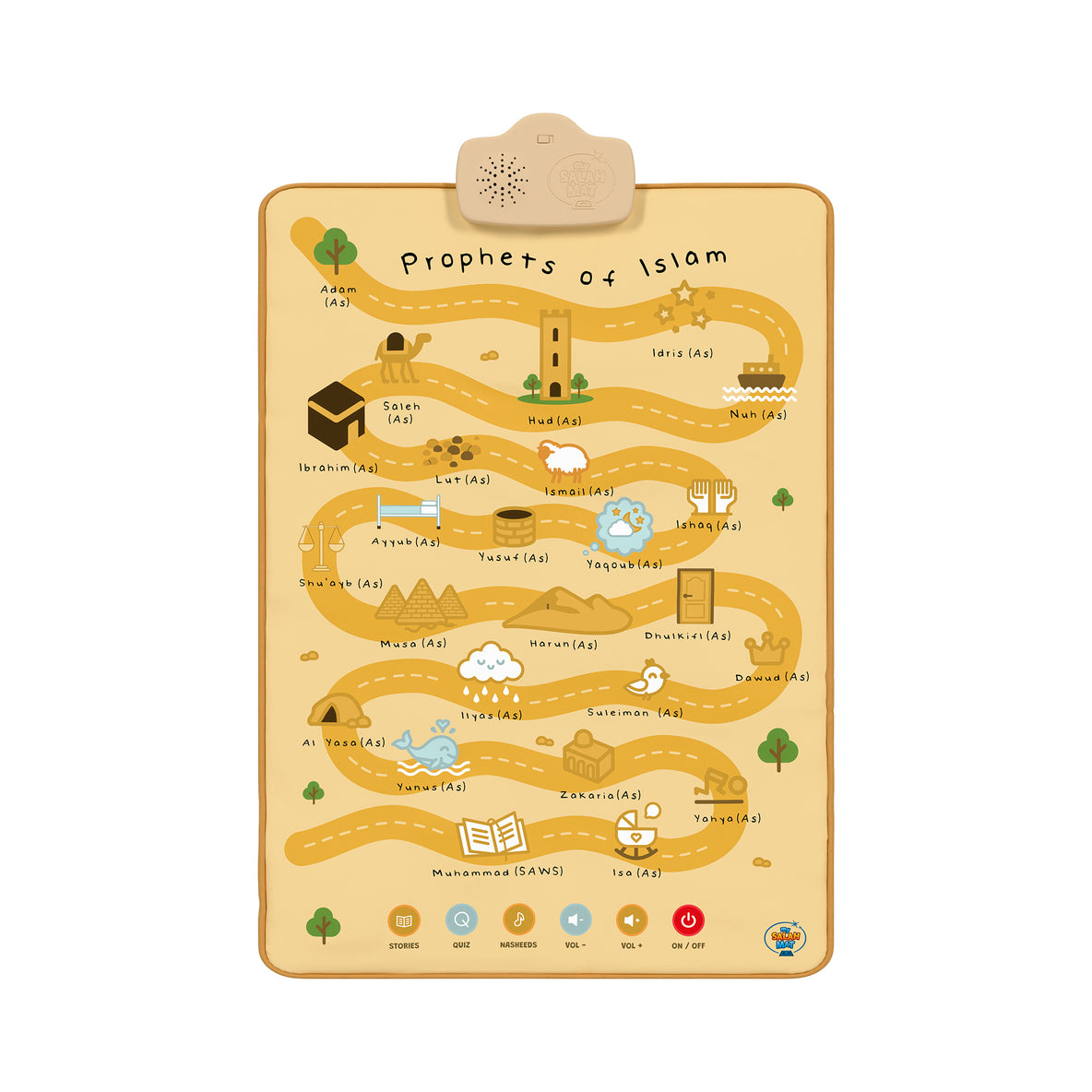
The Prophets Interactive Wall Art allows children to hear and revisit the stories of the 25 Prophets in a calm, accessible way. Because it remains visible in the home, learning becomes part of daily life rather than something confined to a classroom.
Children often press it out of curiosity. Over time, that curiosity becomes understanding.

Making Learning Engaging for Young Muslim Learners
Children today are surrounded by stimulation. To compete with that environment, Islamic learning must be accessible and engaging.
Interactive wall art supports learning by:
- Reinforcing names and stories through sound
- Encouraging repetition without pressure
- Allowing children to explore independently
- Supporting different learning styles
It transforms learning into an experience rather than a task.
For parents searching for meaningful gifts for young Muslim learners, educational tools that strengthen identity are often more impactful than temporary toys. Islamic gifts that nurture knowledge and pride in faith create long term benefit.

Islamic Gifts That Shape Character
Not all Islamic gifts are equal. Some entertain, some decorate, while some others educate. What if we have Islamic gifts that combine all three?
The Prophets Interactive Wall Art serves as both a learning tool and a visible reminder of Islamic heritage. It is often chosen as one of the most meaningful Islamic gifts for Ramadan, Eid, or special milestones because it strengthens understanding while remaining beautiful and practical in the home.
When children grow up hearing the names of the Prophets regularly, those names become familiar anchors of identity.
The Long Term Impact of Knowing the Prophets
A child who knows the Prophets grows up knowing that faith includes:
- Patience in hardship
- Mercy in strength
- Courage in adversity
- Integrity in character
This knowledge shapes how they see themselves as Muslims in wider society.
Islamic identity built on stories of the Prophets is not fragile. It is rooted in history, resilience, and belief.
A Gentle Closing Reflection
In a world where children are constantly shaped by outside influences, learning about the Prophets gives them grounding.
It reminds them who they belong to, shows them what faith looks like in action, and strengthens their sense of purpose.
May Allah allow our children to love the stories of the Prophets and grow into confident, compassionate Muslims shaped by their example.
FAQs
1. At what age can children start learning about the Prophets?
Children can begin learning simple Prophet stories from a young age. The depth of understanding increases naturally as they grow.
2. How does interactive learning help children remember the Prophets?
Interactive learning tools combine sound and repetition, making it easier for children to retain names and stories.
3. Is the Prophets Wall Art suitable as an Islamic gift?
Yes. It is one of the most meaningful Islamic gifts because it combines education, engagement, and daily visibility.
4. How often should children revisit Prophet stories?
Regular exposure works best. Even short daily listening sessions build familiarity and understanding over time.
5. Why are Prophet stories important for Islamic identity?
They provide real role models, moral guidance, and a sense of belonging within Islamic history.
0 comments