

Ramadan is a month of stories.
Stories whispered after iftar. Stories shared before bedtime. Stories that help children understand faith not through rules, but through people who lived it with patience, courage, and trust in Allah.
For children, the stories of the Prophets are not just history. They are lessons wrapped in emotion. They show children what it means to rely on Allah, to stay kind during hardship, and to keep faith even when things feel difficult.
Ramadan is the perfect time to bring these stories into family life in a way that feels calm, meaningful, and memorable.
Why Prophet Stories Matter So Much for Children
Children learn best through narrative. When they hear about Prophet Nuh’s patience, Prophet Ibrahim’s trust, or Prophet Musa’s courage, they begin to see faith as something lived, not just taught.
Prophet stories help children
- understand big ideas in simple ways
- connect emotionally to Islam
- see role models they can admire
- ask questions and reflect naturally
During Ramadan, hearts are already softer, making it easier for these stories to take root.

Making Storytelling a Ramadan Routine
Storytelling does not need to be long or complicated. Even five minutes a day can have a powerful impact.
Many families choose
- one story before 'Asr
- a short listening moment before bed
- one Prophet per week to focus on
Consistency matters more than detail. Children often remember how the story made them feel rather than every fact.
Let storytelling feel calm and unhurried. Ramadan nights are made for this.
Bringing Prophet Stories to Life with Interactive Learning
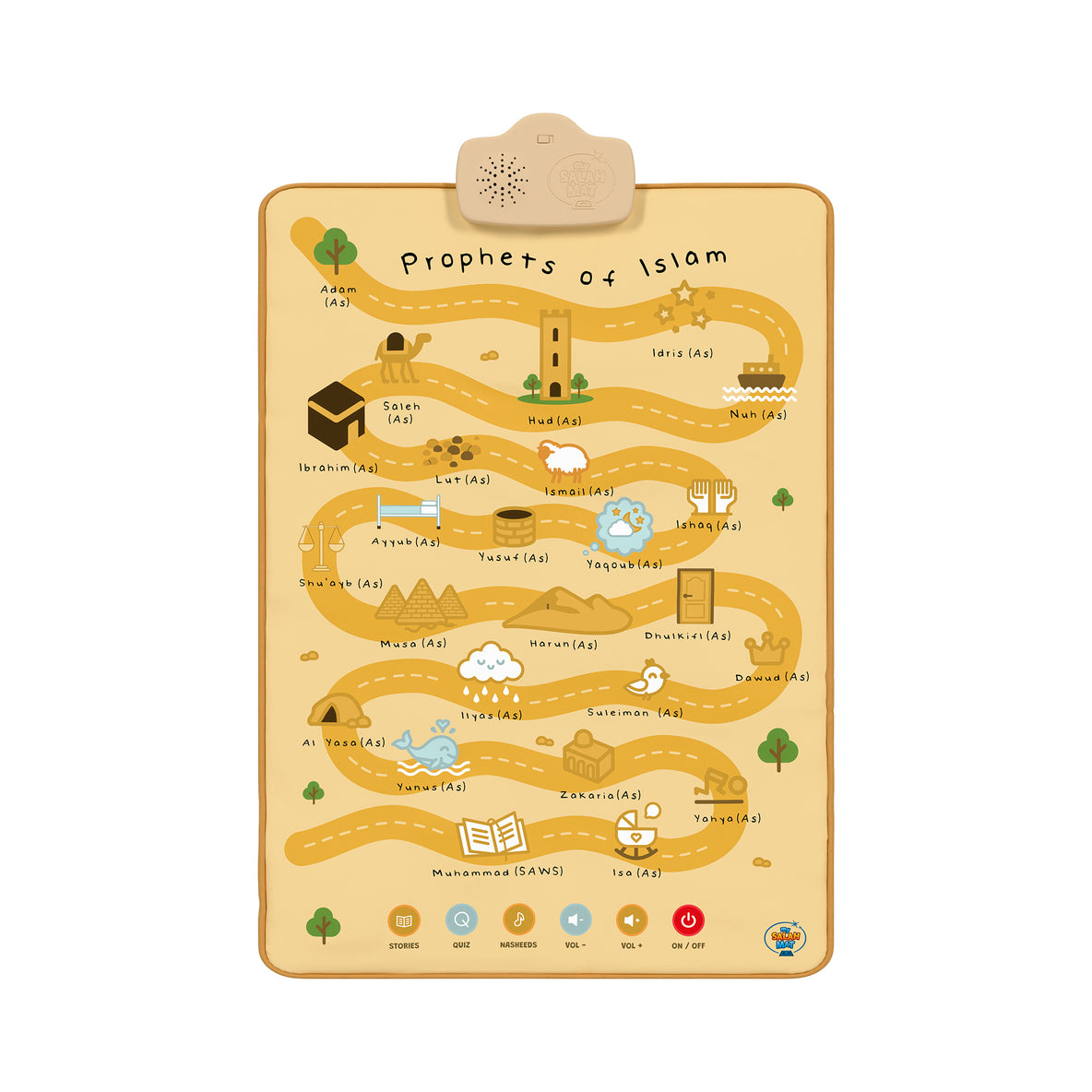
Some children learn best by listening, others by seeing, and others by repeating. The 25 Prophets Interactive Wall Art supports all of these learning styles.
With simple audio, children can
- hear the names of all 25 Prophets
- listen to short, child-friendly stories
- revisit the stories independently
- connect learning to daily life
Because the wall art stays visible in the home, learning becomes part of the environment rather than a separate task. Many children press it out of curiosity, and over time that curiosity turns into understanding.
Families often choose one Prophet each evening to listen to and briefly talk about together.
Reinforcing Learning with the Free 25 Prophets Flashcards
Alongside listening, visual repetition helps stories settle in a child’s memory. The FREE 25 Prophets Flashcards are a simple way to reinforce what children hear.
Parents use the flashcards to
- review Prophet names
- ask gentle questions
- match stories to names
- encourage recall without pressure
They can be used during quiet time, car journeys, or as a short activity before iftar. Because they are free and flexible, they remove barriers for parents who want to teach but feel unsure where to start.

Encouraging Reflection, Not Just Recall
The goal of storytelling is not memorisation alone. It is reflection.
After a story, try asking
- What did you like about this Prophet
- What do you think was difficult for them
- How did they trust Allah
There are no wrong answers. These conversations help children internalise lessons rather than simply repeat information.

A Gentle Closing Reflection
When children grow up hearing the stories of the Prophets during Ramadan, those stories become woven into their understanding of faith.
They learn that Islam is not only about what we do, but about who we become. About patience, trust, gratitude, and turning to Allah in every situation.
May Allah place barakah in every story shared, every question asked, and every small moment of learning this Ramadan.
FAQs
1. At what age can children start learning Prophet stories?
Children can begin listening to simple Prophet stories from a very young age. The depth of discussion can grow as they grow.
2. How often should we share Prophet stories during Ramadan?
Even a few times a week is enough. Consistency and calm matter more than frequency.
3. Do children need to memorise all 25 Prophets?
No pressure for children to memorise them. Familiarity and understanding come first. Memorisation can develop naturally over time.
4. How does interactive wall art help learning?
It allows children to listen, repeat, and engage independently, making learning feel natural rather than forced.
5. Are flashcards useful if my child is very young?
Yes. Flashcards support recognition and repetition and can be adapted to suit different ages and attention spans.
0 comments