

In a world filled with screens, many parents are searching for healthier ways to help their children learn about Islam. Screen-free Islamic toys offer a calm and engaging alternative, helping children build habits around prayer, Qur’an, and reflection through real interaction rather than passive viewing.
Why Screen-Free Helps Attention and Habit Building
Children’s brains are designed to learn through repetition and real interaction. When screens are removed from the process, children often focus more deeply and retain information longer.
Screen-free learning encourages children to slow down, listen carefully, and repeat what they learn in a meaningful way.
Repetition Without Distraction
Interactive learning tools that do not rely on screens allow children to repeat sounds, movements, and ideas without notifications or visual overload.
For example, prayer-based learning tools guide children through the steps of Salah in a calm environment where they can practise repeatedly. Because there is no scrolling or switching between apps, their attention remains focused on the act of learning itself.

This kind of repetition helps build confidence and familiarity.
Parent-Child Connection
Screen-free learning also creates space for conversation. When children are using physical learning tools rather than screens, parents are naturally involved.
Parents can guide, answer questions, and reflect with their children. This shared experience helps strengthen both learning and family connection.
Instead of learning alone with a device, children learn together with their family.
What to Buy Instead of Screens (By Routine)
Rather than searching for general toys, it can help to think about the daily routines where Islamic learning naturally fits. Screen-free tools that support these routines often become the most valuable.
Prayer Routine
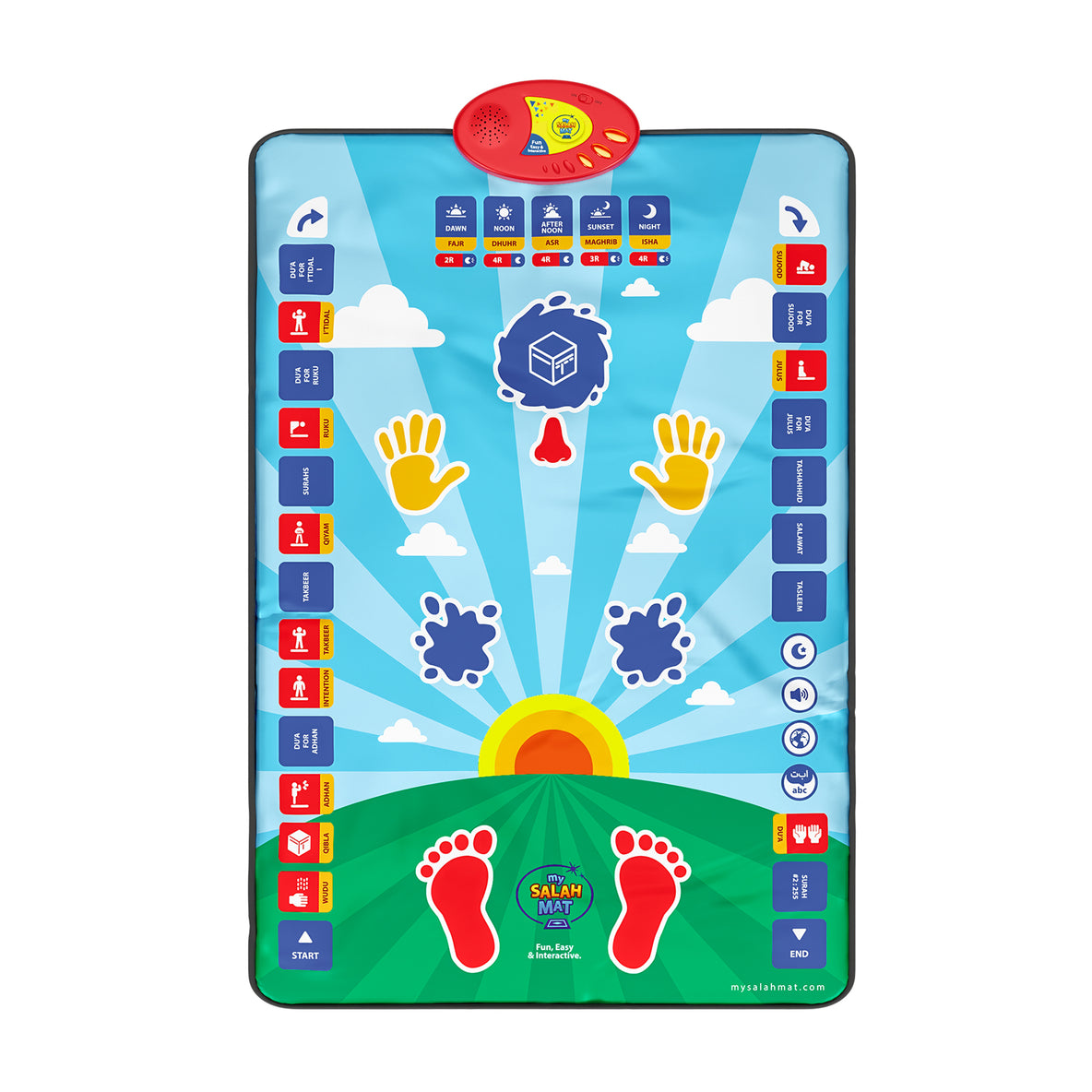
One of the most effective screen free Islamic toys for daily practice is a prayer learning tool.
Interactive prayer mats allow children to learn the movements and order of Salah through guided prompts and repetition. These tools help children understand prayer step by step and allow them to practise alongside their parents.
Families looking for tools that support this routine can explore Prayer Mats designed specifically for young learners.
Qur’an Routine
Developing familiarity with the Qur’an is another key part of a child’s learning journey. Interactive devices that introduce Arabic sounds and letters help children build confidence without relying on screens.
Tools that allow children to press, listen, and repeat can make Qur’an learning feel natural and engaging.
Parents can explore options like the Quran Pad, which helps children become comfortable with Qur’anic sounds and pronunciation in a calm, interactive way.

Bedtime Routine
Bedtime is one of the most powerful moments for learning. Children are naturally reflective at the end of the day, making it an ideal time for stories and gentle reminders.
Islamic storybooks that share the lives of the Prophets, the companions, and important Islamic lessons can help children connect emotionally with their faith.
Families can browse the Storybooks collection to find stories that nurture both imagination and understanding.

Learning Through Visual Reminders
Visual learning tools can also be part of a screen-free routine. Wall displays that teach the Names of Allah, stories of the Prophets, or Islamic values help reinforce learning every day.
Because these tools remain visible in the home, children return to them naturally.
Parents can explore options in the Wall Art collection, which combines learning with daily reminders of faith.

A Gentle Closing Reflection
Screen-free learning creates space for deeper focus, stronger family connection, and meaningful habits. When children practise prayer, listen to Qur’an, and learn through stories without digital distraction, they develop routines that stay with them for life.
Choosing thoughtful screen free Islamic toys helps parents nurture faith in a calm, consistent, and engaging way.
FAQs
1. Why are screen-free Islamic toys better for children?
They reduce distractions and allow children to focus on learning through repetition, sound, and physical interaction.
2. What are examples of screen-free Islamic learning tools?
Prayer mats, Qur’an learning devices, Islamic storybooks, and interactive wall art are all effective screen-free learning tools.
3. How do screen-free tools help children build habits?
Because they are used in daily routines such as prayer or bedtime, children naturally repeat the activity and build consistent habits.
4. At what age should children start using Islamic learning tools?
Children can begin engaging with simple interactive tools from toddler age, with more structured learning tools as they grow.
5. Do screen-free tools replace Islamic teaching from parents?
No. They support parents by reinforcing learning at home, but guidance and conversation from parents remain essential.
0 comments