

In many homes today, screens have become the default form of entertainment. Yet as Muslim parents and educators, we are constantly asking a deeper question: What is shaping our children’s hearts?
The toys our children play with are never “just toys.” They influence language, habits, imagination, and even spiritual growth. That is why Islamic toys that are educational, purposeful, and screen-free can make such a meaningful difference.
When chosen thoughtfully, they become tools of tarbiyah (education), nurturing not only knowledge, but love for Allah, His Messenger ﷺ, and the beautiful teachings of Islam.
Why Islamic Toys Work Best When They’re Screen-Free
Screens may capture attention quickly, but they rarely build reflection or deep understanding. Screen-free Islamic toys, on the other hand, invite children to engage slowly, repeatedly, and meaningfully.
Attention, Repetition, Routine
Children thrive on routine. When a toy supports daily habits like Salah or Qur’an recitation, it becomes part of their rhythm.
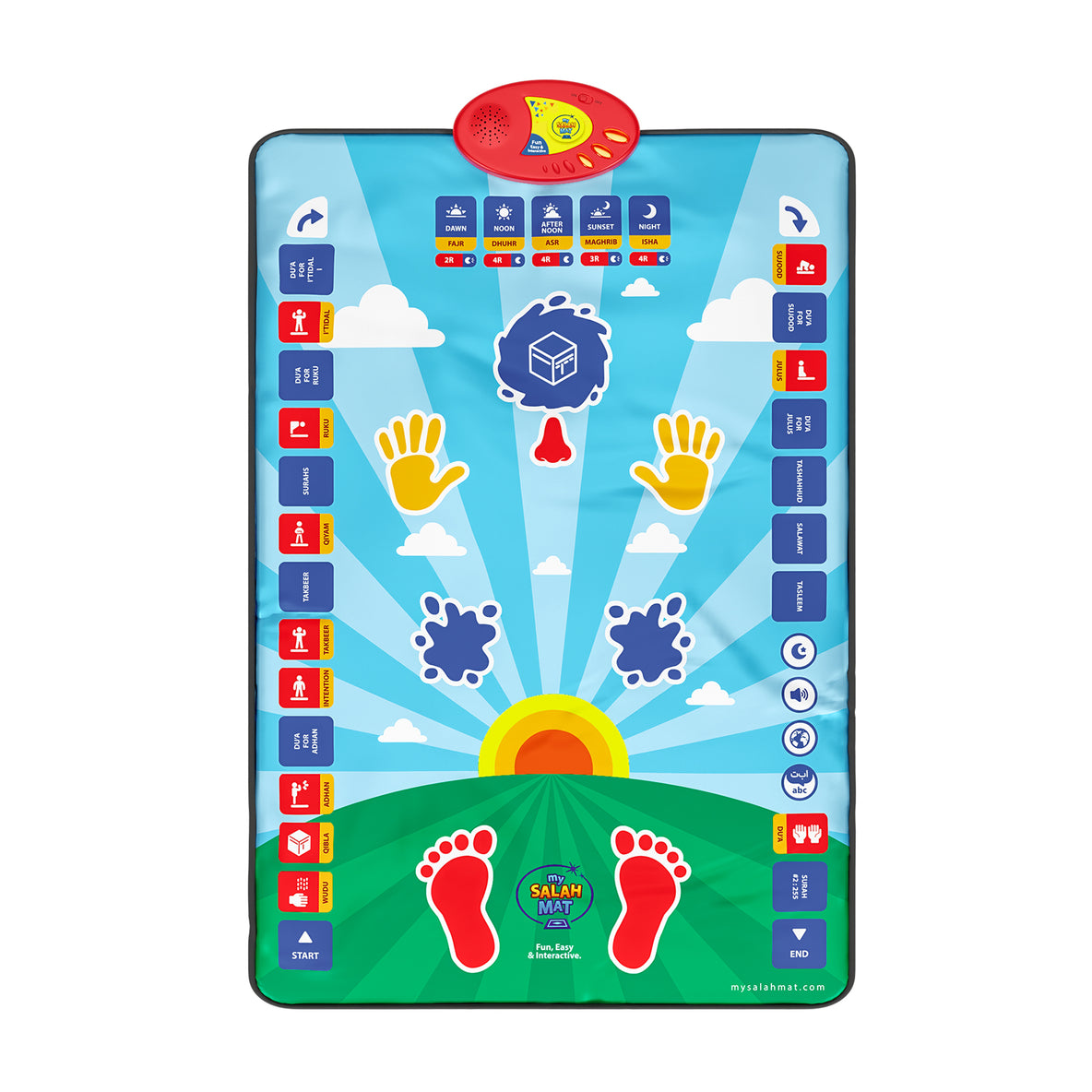
For example, a child who uses a Kids Interactive Prayer Mat each day begins associating prayer time with excitement and familiarity. The mat guides them through movements and recitations step by step, helping build confidence and consistency.
Repetition strengthens memory. Routine strengthens discipline. Together, they nurture lifelong habits of worship.

Learning Through Touch and Sound
Young learners absorb knowledge through their senses. When a toy allows them to press, listen, repeat, and physically interact, learning becomes active rather than passive.
Touch builds connection. Sound builds confidence. Together, they create joyful Islamic learning experiences that screens simply cannot replicate.
7 Islamic Educational Toys (by Learning Goal)
Beyond age and price categories, it can also be helpful to think about the learning goal you want to nurture. Are you teaching Salah? Arabic letters? Seerah? Love for Islamic identity? Here are categories of Islamic toys that support different areas of growth.
Tools That Teach Salah
Salah is the foundation of a Muslim’s life. Introducing it early helps children grow up seeing prayer as something natural and beloved.
The My Salah Mat Smart Interactive Prayer Mat is designed to guide children through the steps of prayer in an engaging and structured way. With touch-sensitive guidance and clear audio, it teaches movements and recitations while keeping children actively involved.
Used consistently, it supports memorisation, confidence, and most importantly, love for Salah.
Toys That Teach Arabic and Quran
Learning to read the Qur’an in Arabic is a milestone for both children and reverts. The journey can feel overwhelming without the right tools.
The My Quran Pad introduces Arabic letters and short Surahs through clear audio and repetition. Children can press each letter, hear its pronunciation, and repeat at their own pace.
For bilingual families, this is especially powerful. It bridges English-speaking homes with the beauty of Qur’anic Arabic in a gentle, interactive way.
Toys That Teach Seerah and Islamic History
Stories shape identity. When children know about the Prophets, the Sahabah, and the great women of Islam, they grow up with role models rooted in faith.
The Prophets of Islam Wall Art, along with other interactive wall arts transform walls into living classrooms.
Children can press, listen, and explore. They learn names, stories, and values in a way that feels exciting rather than academic. Over time, these stories shape character: patience like Prophet Nuh, courage like Prophet Musa, mercy like Prophet Muhammad ﷺ.

Soft Toys That Nurture Identity
Not all learning happens through structured lessons. Sometimes, identity is nurtured through comfort and familiarity.
The Nur The Watermelon Plushies offer children a soft companion that reflects joy and positive Muslim identity. Plush toys can become part of storytelling, emotional development, and imaginative play.
When Islamic symbols and characters are part of daily play, children grow up feeling proud of who they are.

Choosing the Right Islamic Toys for Your Home
The best Islamic toys are not the loudest or flashiest. They are the ones that:
- Encourage daily worship
- Support repetition and routine
- Build love for the Qur’an
- Teach Islamic history and values
- Strengthen Muslim identity
When toys align with faith goals, playtime becomes purposeful. Learning becomes joyful. And homes become spaces of remembrance.
May Allah place barakah in the tools we choose to shape our children’s hearts, and make them among those who love His words and follow His guidance. Ameen.
FAQs
1. What are Islamic toys?
Islamic toys are educational toys designed to teach children about Islam, including Salah, Qur’an, Arabic, and Islamic history.
2. Why choose screen-free Islamic toys?
Screen-free toys encourage focus, hands-on interaction, and consistent routines, helping children learn through repetition and active engagement.
3. At what age should children start using Islamic toys?
Many Islamic toys are suitable from age 3 and above, depending on the product. Early exposure builds familiarity and confidence.
4. Can Islamic toys help with memorisation?
Yes. Interactive toys that include audio and repetition can significantly support memorising surahs, duas, and prayer steps.
5. Are Islamic toys suitable for reverts and bilingual families?
Absolutely. Many products are designed to support learners who are new to Arabic or Islam, making faith accessible in a gentle and engaging way.
0 comments