

Message from the writer: "The challenge to teach kids salah is their disinterest when the practice feels daunting. Be it that they feel overwhelmed, bored, or not confident. But when they feel safe around prayer, joy follows naturally. So in this blog, I will share some tips on how to make salah fun for kids."
Start with Connection, Not Correction
Children learn Salah by watching and copying. When prayer time feels tense or filled with constant corrections, confidence fades.
Instead of focusing on mistakes, focus on showing up together.
Invite your child to stand beside you. Let them try the movement; the recitation. Allow them to ask questions. A child who feels encouraged will keep returning, inshaAllah.
Use Movement and Sound to Teach Salah
Children learn through their bodies.
Standing, bowing, prostrating. These actions help children remember far more than verbal instructions alone. Sound reinforces learning, especially when it is clear, calm, and repeatable.
This is why interactive, movement-based learning works so well for Salah.

Give Children Their Own Prayer Space
Having something that belongs to them changes everything.
When children have their own prayer mat, prayer feels personal. It’s no longer something they are borrowing from adults but something they own.
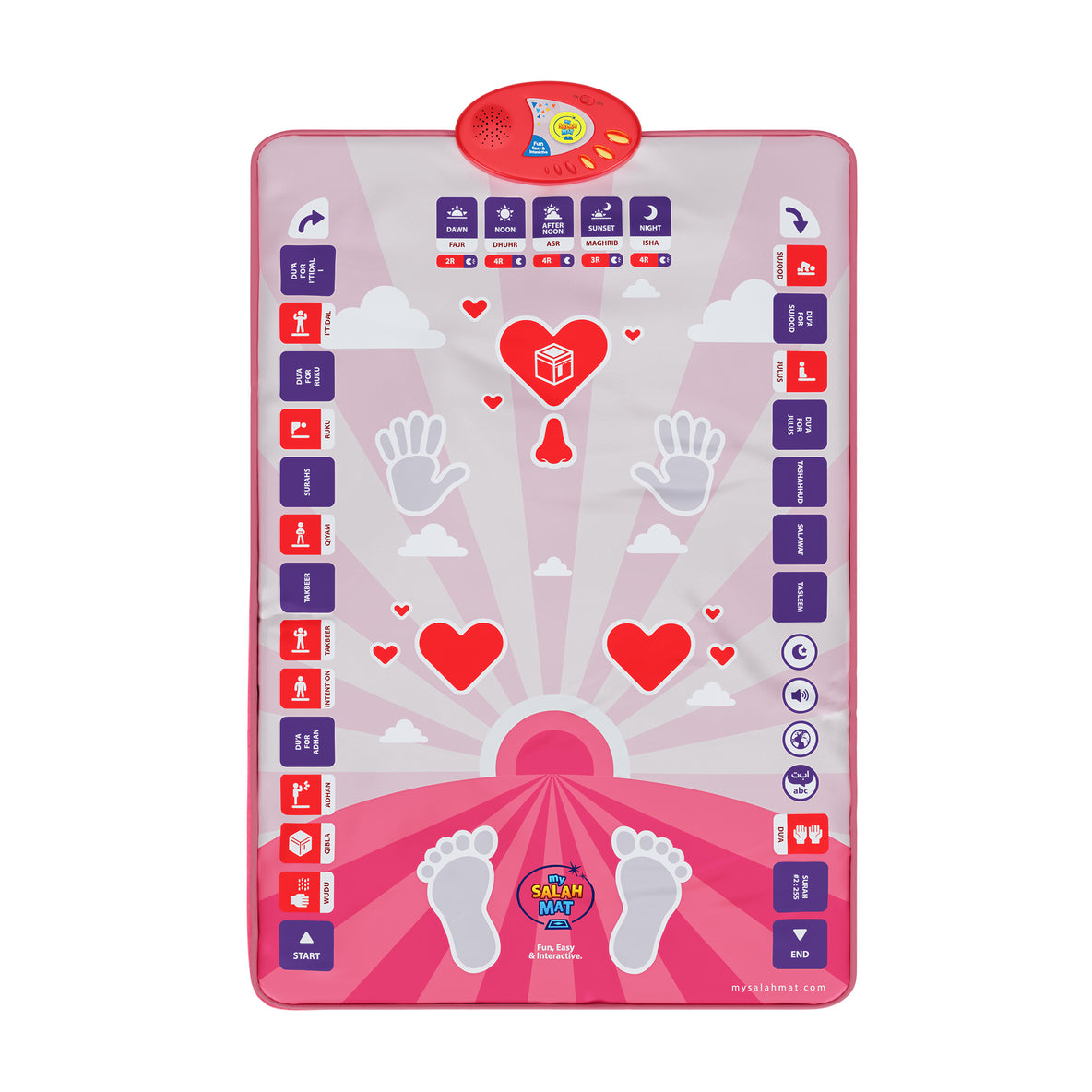
The My Salah Mat Interactive Prayer Mat is designed with this in mind. It guides children step by step through Salah using gentle audio and touch-sensitive areas, helping them understand what comes next without feeling rushed or judged.
The pink design is soft, welcoming, and child-friendly, making prayer feel inviting rather than intimidating.
Many parents notice that children return to the mat on their own, practising and replaying sections because learning feels enjoyable.

Keep Practice Short and Positive
Children do not need to complete every prayer perfectly.
Even performing one rak‘ah, practising movements, listening to recitation, or copying quietly is enough.
Short, positive interactions build consistency. Long, forced sessions often do the opposite.
Using an interactive prayer mat allows children to practise independently in short bursts, helping Salah become familiar over time.
Celebrate Effort, Not Perfection
Praise your child for trying.
Thank them for joining. Smile when they stand beside you. Let them know Allah loves effort.
When children associate Salah with warmth and encouragement, they grow into adults who return to prayer willingly.
A Gentle Closing Reflection
Making Salah fun for kids is not about entertainment. It is about removing fear and building familiarity.
When prayer feels calm, guided, and encouraging, children develop confidence. And confidence leads to consistency.
Tools like the My Salah Mat Interactive Prayer Mat are not shortcuts, but supports. It helps children learn Salah step by step, at their own pace, with joy rather than pressure.
May Allah place barakah in every small step our children take toward Him, and may Salah always feel like a place of peace for them.
FAQs
1. What age is the Interactive Prayer Mat suitable for?
The mat is ideal for children aged 3+, but can be used for older children who need confidence and structure.
2. Does my child need to already know how to pray?
No. The mat is designed for beginners and guides children step by step through the movements and order of Salah.
3. Is the Interactive Prayer Mat screen-free?
Yes. It uses audio guidance and touch interaction without screens, helping children stay focused and calm.
4. Can children use the mat on their own?
Yes. Many children practise independently, replaying sections and learning at their own pace.
5. How does this help make Salah fun rather than stressful?
By offering gentle guidance, repetition, and encouragement, the mat removes fear of mistakes and builds confidence naturally.
You may also like to read:
How to Teach Salah to SEN Children with Kindness and Confidence
Why Fun and Faith Should Go Hand in Hand in Islamic Parenting
0 comments