

Message from writer: "Every child connects to Salah differently. Some learn quickly with imitation, others need time, repetition and reassurance. For SEN children, their learning journey may simply unfold in a calmer, slower or more structured way. What matters most is that the process feels safe, gentle and full of encouragement. With that spirit of compassion, this guide shares practical ways to introduce Salah to SEN children, while honouring their pace and unique strengths."
Understanding SEN Children Through Kindness and Ease
SEN children may learn differently, express differently or experience the world in their own way. Some thrive with visual steps. Others feel secure with predictable routines. Some enjoy practising movements. Others prefer observing first.
The goal is not perfection. It is familiarity and comfort.
Gentle teaching allows a child to approach Salah as something peaceful rather than demanding. When we honour their pace and adapt to their needs, we help Salah become a source of ease instead of pressure.
"So be mindful of Allah to the best of your ability..." (Q.S. At-Tagabun:16)
Islam does not burden a soul beyond its capacity. Every small step a child takes toward Salah carries value with Allah.

Three Gentle Ways to Teach Salah to SEN Children
1. Break Salah into small, simple steps
Instead of teaching the full prayer at once, introduce one step at a time.
For example
• Today, practise standing
• Tomorrow, add bowing gently
• Another day, try sujood
Children feel more confident when learning is broken into achievable pieces. Consistency builds familiarity, and familiarity builds comfort.
2. Use visual or movement based cues
Many SEN children respond comfortably to visual aids or physical demonstration. Simple pictures, hand signals or following a parent’s movements can offer reassurance and clarity. Short, repeated phrases such as “Hands up” or “We bow now” can also help the child predict what is coming next.

3. Create a calm routine around Salah
Children thrive with predictability. A designated prayer space, a familiar mat and a gentle tone can help the child associate Salah with peace. Keeping practice sessions short and regular is more effective than long sessions that tire them. A few minutes daily can gradually build confidence.
How the Interactive Prayer Mat Supports SEN Learners
The Interactive Prayer Mat has been used in SEN environments (read the page below) where teachers observed positive engagement and growing confidence among their learners.
It supports SEN children because it
• shows each step visually
• guides them through gentle audio
• allows practice through touch
• offers a predictable sequence they can repeat each day
• helps them learn independently at their own pace
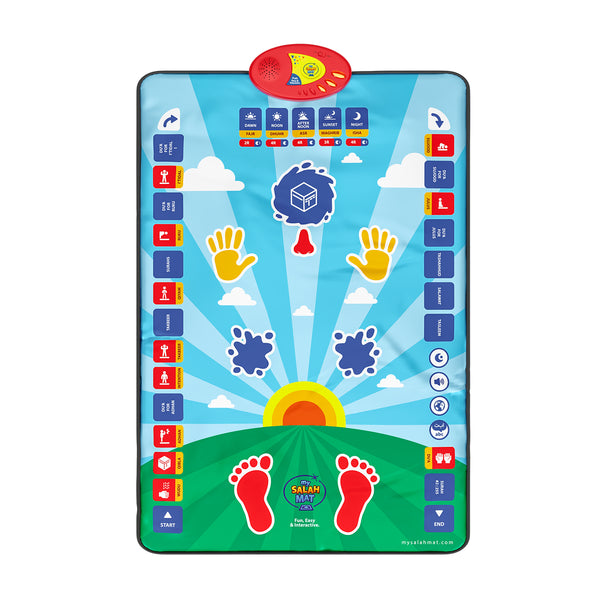
Some children may use the audio fully while others prefer only the lights and steps. The mat adapts naturally to the child’s comfort. Parents and teachers often use it as a structured guide that introduces Salah in a calm and familiar way.
Alongside it, parents can accompany their children using the Adult Interactive Prayer Mat

Closing Reflection
Teaching Salah to SEN children is a journey of patience, love and understanding. Every attempt, every moment of practice, and every smile of progress is witnessed by Allah. The aim is not to rush, but to nurture. Not to demand, but to guide gently.
May Allah bless every child with a heart that finds peace in prayer and bless every parent and teacher with wisdom and softness in this beautiful effort.
You may also like to read:
How the Interactive Prayer Mat Is Supporting SEN Children at Bilal Academy
How One Mother and Her Son with Down Syndrome from Bradford Are Spreading the Love of Salah
FAQs
1. Can SEN children learn Salah in simplified steps?
Yes. Children should learn in ways that feel comfortable for them. Breaking Salah into small steps helps build confidence.
2. Is the Interactive Prayer Mat helpful for SEN learners?
Yes. It provides visual cues, simple guided audio and a predictable sequence. Many SEN teachers and parents have found it beneficial.
3. What if my child cannot perform every movement?
They only need to do what they can. Islam honours ability. A child is not accountable for what is beyond their capacity.
4. How long should practice sessions be?
Short, consistent sessions are best. Even a few minutes daily can build familiarity and comfort.
5. How can I support my child Islamically if their learning pace is different?
Islam honours individual ability. When you guide your child with patience and kindness, you are practising a form of worship. Allah rewards effort, not perfection, and every sincere step your child takes toward Salah is valued by Him.
0 comments